Abstract
Virtual Reality has emerged as an important digital retail technology capable of transforming conventional online shopping into an interactive and experience-oriented activity. Traditional e-commerce platforms commonly use photographs, descriptions, customer reviews, and videos to present products, but these methods provide limited opportunities for direct product exploration. Virtual Reality-based shopping addresses this limitation by enabling consumers to enter simulated retail environments, interact with three-dimensional products, undertake virtual try-ons, and observe products in realistic contexts (Davis, 1989). This paper examines the influence of VR-based shopping on consumer engagement, satisfaction, and purchase intention. It evaluates how immersion, interactivity, telepresence, vividness, realism, perceived usefulness, and ease of use affect consumer responses. The analysis indicates that VR can increase cognitive, emotional, and behavioural engagement by capturing attention and encouraging active product exploration. Realistic visualisation and interactive control improve product understanding, reduce uncertainty, and strengthen confidence in online purchase decisions (Kim & Forsythe, 2008). Satisfaction develops when the virtual experience is enjoyable, responsive, informative, accessible, and consistent with consumer expectations. These outcomes positively influence purchase intention, revisit intention, recommendation behaviour, and loyalty. However, technological complexity, motion discomfort, inaccurate simulations, privacy concerns, accessibility limitations, and high implementation costs can weaken consumer acceptance. The paper concludes that VR-based shopping positively influences consumer behaviour when immersive features deliver practical value, trustworthy product information, and a user-friendly experience.
- Virtual Reality
- VR-based shopping
- consumer engagement
- customer satisfaction
- purchase intention
- immersion
- interactivity
- telepresence
- online retailing
- digital customer experience
Introduction#
The expansion of internet connectivity, smartphones, digital payment services, and e-commerce platforms has substantially changed consumer shopping behaviour. Consumers can search for products, compare alternatives, read reviews, and complete purchases without visiting physical stores (Klaus, 2013). Online shopping provides convenience, greater product variety, time savings, and uninterrupted access to retailers. Nevertheless, conventional online shopping remains limited in its ability to provide realistic and engaging product experiences (Poushneh & Vasquez-Parraga, 2017). Most e-commerce platforms depend on two-dimensional photographs, written descriptions, videos, and customer ratings. These information sources do not allow consumers to physically inspect, try, manipulate, or experience products before purchase.
The absence of physical product interaction can create uncertainty regarding quality, size, colour, design, fit, functionality, and suitability (Davis, 1989). This uncertainty increases perceived risk and may discourage consumers from completing online transactions (Klaus, 2013). Products such as clothing, footwear, furniture, automobiles, jewellery, tourism services, and real estate require detailed visual, spatial, or experiential evaluation. Conventional websites may not provide sufficient information to support confident decisions in these categories.
Virtual Reality has emerged as an important technology for reducing the experiential gap between physical and online shopping (Kim & Forsythe, 2008). It creates computer-generated three-dimensional environments in which consumers can explore virtual stores and interact with digital representations of products (McLean & Wilson, 2019). Depending on the system, consumers may access these environments through head-mounted displays, computers, smartphones, motion controllers, or related devices. VR allows users to rotate products, inspect details, change colours, compare configurations, navigate showrooms, and experience simulated usage conditions.
Three concepts explain much of VR’s influence on shopping behaviour: immersion, interactivity, and telepresence (Kim & Forsythe, 2008). Immersion refers to the degree to which the technology surrounds users with sensory information. Interactivity describes users’ ability to control and modify the virtual environment (Javornik, 2016). Telepresence represents the psychological feeling of being situated within the digitally created space. These characteristics can make virtual shopping more engaging and memorable than conventional website browsing.
Consumer engagement is important because it reflects the level of cognitive attention, emotional connection, and behavioural participation that consumers develop during their interactions with a retailer (Javornik, 2016). Highly engaged consumers are more likely to examine products carefully, spend additional time on the platform, interact with its features, and develop stronger brand relationships (McLean & Wilson, 2019). VR can stimulate engagement by transforming consumers from passive viewers into active participants.
Customer satisfaction represents consumers’ evaluation of whether an experience meets or exceeds their expectations (Poushneh & Vasquez-Parraga, 2017). In VR-based retailing, satisfaction depends on the realism, usefulness, enjoyment, responsiveness, accessibility, and reliability of the virtual system (Rose et al., 2012). Consumers are more likely to be satisfied when VR helps them understand products, reduces uncertainty, and makes shopping enjoyable without introducing unnecessary complexity.
Purchase intention represents the consumer’s willingness or likelihood to buy a product (Poushneh & Vasquez-Parraga, 2017). It is influenced by product knowledge, perceived value, trust, risk, satisfaction, and emotional response (Davis, 1989). VR may strengthen purchase intention by providing richer information, increasing psychological involvement, and enabling personalised product exploration.
This paper examines how VR-based shopping affects engagement, satisfaction, and purchase intention (Kim & Forsythe, 2008). It evaluates the roles of immersive experience, interactive product evaluation, trust, perceived usefulness, ease of use, and emotional involvement (Davis, 1989). It also discusses the technological and ethical conditions that determine whether virtual retail experiences produce favourable behavioural outcomes.
Dimensions of Consumer Engagement in VR-Based Shopping#
Consumer engagement is a multidimensional concept reflecting the attention, emotion, participation, and behavioural investment that consumers direct towards a retailer or shopping experience (Klaus, 2013). In conventional online shopping, engagement may involve browsing product pages, reading reviews, comparing prices, adding items to wish lists, and communicating with the retailer (McLean & Wilson, 2019). Virtual Reality extends these activities by allowing consumers to enter simulated retail environments and interact directly with three-dimensional products.
Cognitive engagement refers to the degree of attention and mental processing that consumers apply during shopping (McLean & Wilson, 2019). VR can increase cognitive engagement by presenting information in an interactive and spatially organised form (Kim & Forsythe, 2008). Consumers may inspect individual product features, compare configurations, evaluate products from multiple directions, or test simulated functions. These activities require active information processing and may produce greater product understanding than passive viewing.
The ability to control information can also improve cognitive involvement (Davis, 1989). Consumers do not need to follow a fixed sequence of photographs or descriptions; instead, they can investigate the features that are most relevant to their needs (McLean & Wilson, 2019). For example, a vehicle buyer may focus on interior design and controls, while a furniture buyer may concentrate on size, colour, and room compatibility. This consumer-directed exploration improves the relevance of the information obtained.
Emotional engagement refers to the feelings generated during the shopping experience (Slater & Sanchez-Vives, 2016). Immersive environments may produce enjoyment, excitement, curiosity, pleasure, and surprise (Flavián et al., 2019). These emotions can make shopping more memorable and influence attitudes towards products and retailers. A creatively designed virtual showroom may communicate the personality of a brand and create an emotional association that a conventional product page cannot easily reproduce.
Behavioural engagement involves active participation (Slater & Sanchez-Vives, 2016). In VR environments, consumers may navigate virtual stores, manipulate products, change product characteristics, undertake virtual try-ons, participate in demonstrations, and communicate with virtual assistants (Steuer, 1992). Such activities increase the amount of interaction between consumers and the retail platform. Consumers who actively explore a product may spend more time considering it and may develop stronger purchase interest.
Social engagement can also be incorporated into virtual retailing (McLean & Wilson, 2019). Consumers may visit virtual stores with friends, communicate with sales representatives, attend digital product launches, or share product configurations (Childers et al., 2001). Social interaction can reproduce some of the interpersonal qualities of physical shopping and provide additional information or reassurance. However, social functions should remain optional because some consumers may prefer private shopping.
Engagement is closely associated with immersion, interactivity, vividness, and telepresence (Steuer, 1992). Immersion focuses attention on the virtual environment, while interactivity enables consumers to participate actively (McLean & Wilson, 2019). Vividness increases the richness of sensory information, and telepresence creates the feeling of being inside the digital store. Together, these characteristics can strengthen cognitive, emotional, and behavioural engagement.
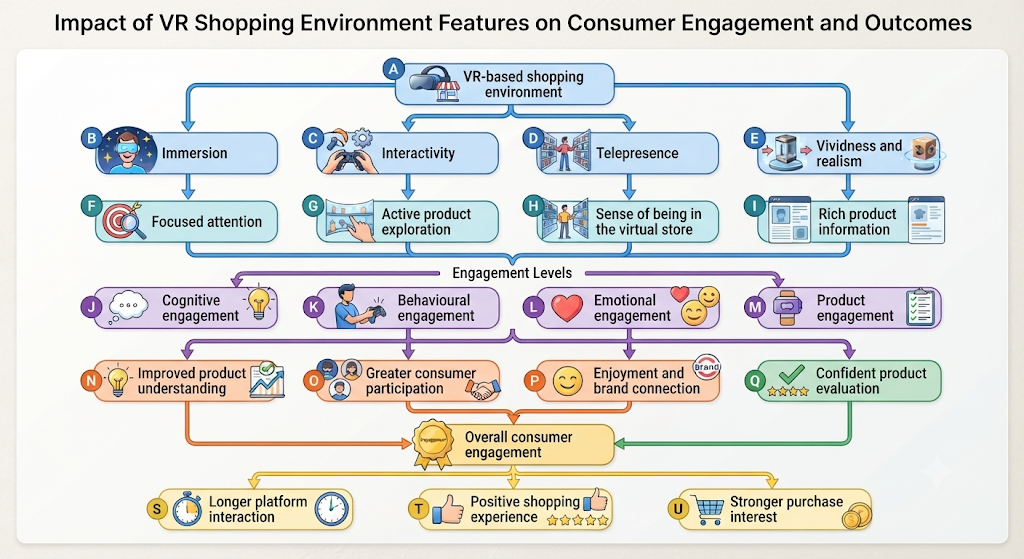
Figure 1: Multidimensional consumer engagement in VR-based shopping
However, greater technological intensity does not always produce stronger engagement (Wedel et al., 2020). Complex controls, excessive visual effects, slow responses, and irrelevant entertainment may increase cognitive burden. Consumers may become distracted from their purchasing objectives or abandon the system (Steuer, 1992). Effective engagement therefore requires a balance between experiential richness and practical simplicity. Virtual Reality should direct consumer attention towards useful product information and support purchasing decisions rather than creating technological complexity without clear value.
Role of Immersion, Interactivity and Telepresence in Customer Satisfaction#
Customer satisfaction develops when consumers perceive that a shopping experience meets or exceeds their expectations (Flavián et al., 2019). In VR-based shopping, satisfaction is influenced by the system’s ability to provide realistic product information, enjoyable interaction, intuitive navigation, and dependable performance (Poushneh & Vasquez-Parraga, 2017). Immersion, interactivity, and telepresence shape these evaluations because they determine the quality of consumers’ involvement in the virtual environment.
Immersion refers to the technical capacity of a VR system to surround users with visual, auditory, spatial, and interactive information (Kim & Forsythe, 2008). High-resolution graphics, spatial sound, wide fields of view, motion tracking, and responsive displays can reduce awareness of the physical environment and strengthen concentration on the virtual store (McLean & Wilson, 2019). A sufficiently immersive environment can make digital shopping more attractive and engaging.
Immersion contributes to satisfaction when it supports product exploration (Poushneh & Vasquez-Parraga, 2017). A consumer examining a virtual hotel room, vehicle, or piece of furniture may obtain information that conventional images cannot provide (Flavián et al., 2019). This additional information increases the practical value of the experience. However, immersion that exists only for entertainment may not improve satisfaction if consumers cannot understand products or complete transactions efficiently.
Interactivity allows users to influence the virtual environment (Kim & Forsythe, 2008). Consumers may select products, rotate objects, change colours, open features, compare alternatives, and move between store sections (Childers et al., 2001). Responsive interaction increases perceived control and enables consumers to personalise their information search. Control is particularly important in online shopping because consumers cannot rely on physical examination or direct sales assistance.
Immediate feedback also contributes to satisfaction (Poushneh & Vasquez-Parraga, 2017). When a consumer changes a product feature, the system should display the result accurately and without delay (Flavián et al., 2019). Poor responsiveness disrupts the experience and reminds consumers that they are interacting with an imperfect technological system. Technical errors can consequently reduce trust and satisfaction even when visual quality is high.
Telepresence refers to the feeling of being located within the virtual environment (Kim & Forsythe, 2008). A strong sense of presence can make shopping more personally meaningful and emotionally involving (Poushneh & Vasquez-Parraga, 2017). Consumers may behave as if they are physically inside the store, increasing attention to products and willingness to explore. Telepresence can also strengthen the emotional relationship between the consumer and the brand.
Satisfaction is influenced by the consistency among immersion, interactivity, and telepresence (Flavián et al., 2019). A visually immersive environment may fail to create presence if product interaction is inaccurate or navigation is confusing (Kim & Forsythe, 2008). Similarly, an interactive system may not be satisfying if graphics are unrealistic. The virtual experience must therefore be coherent and believable.
Perceived usefulness and ease of use further affect this relationship (Davis, 1989). Consumers evaluate whether the VR system improves their ability to shop and whether it can be operated without excessive effort (Grewal et al., 2017). A useful system reduces uncertainty, saves time, or improves product comparison. An easy-to-use system offers clear instructions, simple controls, and predictable responses.
Consumer characteristics also influence satisfaction (Javornik, 2016). Technologically experienced users may appreciate advanced functionality, while first-time users may require guidance (Poushneh & Vasquez-Parraga, 2017). Age, digital literacy, device familiarity, and prior VR exposure can therefore shape satisfaction. Retailers should provide accessible interfaces and multiple interaction options to accommodate different consumers.
Influence of VR on Trust, Perceived Risk and Purchase Intention#
Purchase intention reflects a consumer’s willingness to purchase a product after evaluating available information and possible consequences (Poushneh & Vasquez-Parraga, 2017). In online retailing, purchase intention is shaped by product knowledge, trust, perceived risk, value, satisfaction, and confidence (Javornik, 2016). Virtual Reality can influence these factors by offering consumers more realistic and interactive methods of product examination.
Trust is essential because online consumers cannot directly inspect products or meet sellers (Kim & Forsythe, 2008). They must rely on digital information and believe that the product will correspond with its presentation (Klaus, 2013). VR may strengthen trust by offering detailed three-dimensional representations and simulated demonstrations. Consumers who can inspect products closely may perceive the retailer as more transparent and informative.
Realistic presentation is particularly important (Steuer, 1992). Product dimensions, colours, textures, functions, and configurations should correspond with the actual item. Accurate virtual models can reduce the gap between expected and delivered products (Kim & Forsythe, 2008). Conversely, unrealistic models may create false expectations, increase product returns, and damage trust. Retailers must therefore treat representational accuracy as an ethical and operational requirement.
Perceived risk refers to consumers’ uncertainty regarding negative purchase outcomes (Klaus, 2013). Performance risk concerns whether the product will function appropriately, while financial risk relates to possible monetary loss (Poushneh & Vasquez-Parraga, 2017). Consumers may also experience privacy, psychological, social, and time-related risks. VR primarily addresses performance and suitability risks by improving product visualisation.
Virtual try-ons can help consumers evaluate clothing, accessories, cosmetics, or footwear (Martínez-Navarro et al., 2019). Contextual placement can show furniture within a room, and virtual tours can communicate the characteristics of hotels or properties (McLean & Wilson, 2019). These applications enable consumers to make more informed judgements. Improved understanding can reduce uncertainty and increase purchase confidence.
VR may also influence psychological ownership (Poushneh & Vasquez-Parraga, 2017). Consumers who manipulate, personalise, or experience a product may begin to imagine themselves owning it (Rose et al., 2012). A shopper who customises a vehicle or virtually places furniture inside a home can form a stronger mental association with the product. This feeling can increase purchase intention.
Emotional engagement also contributes to purchase intention (Klaus, 2013). Enjoyment, curiosity, and excitement can create positive attitudes towards products and retailers (Poushneh & Vasquez-Parraga, 2017). However, emotional stimulation should be supported by accurate information. If immersive features are used primarily to encourage impulsive decisions, consumers may later experience regret or dissatisfaction.
Customer satisfaction acts as an important link between VR experience and purchase intention (Poushneh & Vasquez-Parraga, 2017). Consumers who find the system useful, enjoyable, responsive, and realistic are more likely to develop favourable purchasing attitudes (Rose et al., 2012). Positive experiences may also increase intentions to revisit the platform and recommend it to others.
Nevertheless, technological barriers can weaken purchase intention (Childers et al., 2001). Motion discomfort, slow loading, complex navigation, privacy concerns, and equipment costs may reduce acceptance (Davis, 1989). Some consumers may prefer conventional product pages because they are quicker and more familiar. VR should therefore be offered as a helpful shopping option rather than a compulsory interface.
Overall, VR affects purchase intention through a sequence of connected outcomes (Davis, 1989). Immersion and interactivity improve engagement; realistic visualisation strengthens product understanding; greater information reduces perceived risk; and reduced uncertainty strengthens trust and confidence (McLean & Wilson, 2019). These outcomes collectively increase the likelihood of purchase when the system is reliable and easy to use.
Challenges and Strategic Implications for VR-Based Retailing#
Although VR-based shopping offers considerable benefits, its effectiveness is limited by technological, economic, behavioural, ethical, and managerial challenges. Retailers must address these issues before VR can become a widely accepted component of online commerce.
The first challenge is implementation cost (Slater & Sanchez-Vives, 2016). Developing high-quality virtual stores requires three-dimensional product modelling, software development, interface design, device compatibility testing, data infrastructure, and continuous maintenance (Steuer, 1992). Large retailers may possess the resources to invest in immersive systems, but small businesses may find implementation difficult. Cloud-based services and standardised development platforms may reduce these costs over time.
Consumer access represents another challenge (Wedel et al., 2020). Advanced VR experiences may require head-mounted displays, motion controllers, powerful computers, or high-speed internet connectivity. These resources are not available to every consumer (Javornik, 2016). Retailers should therefore design experiences that can function across dedicated VR equipment, computers, tablets, and smartphones. Wider compatibility can improve inclusion and adoption.
Accurate product representation is another strategic requirement (Flavián et al., 2019). Differences between digital and physical products may result from lighting, device displays, scaling, outdated models, or deliberate exaggeration (Kim & Forsythe, 2008). Such inaccuracies can increase dissatisfaction and returns. Retailers should validate virtual models and communicate any limitations of simulated representations.
Organisational integration also influences success. VR should connect with inventory, payment, customer-service, delivery, and return systems. An impressive virtual experience will not produce satisfaction if the selected product is unavailable or delivery is unreliable (Flavián et al., 2019). VR must therefore form part of a complete customer-experience strategy. Retailers should measure performance using behavioural and operational indicators. Engagement time, product interaction, conversion, cart abandonment, return rates, satisfaction, revisit intention, and customer support requests can indicate whether VR provides value (Poushneh & Vasquez-Parraga, 2017). Evaluation should compare virtual experiences with conventional online interfaces. Future VR retailing may incorporate artificial intelligence, digital twins, haptic technologies, conversational agents, and social commerce. AI can personalise virtual environments, while digital twins can improve product accuracy. Haptic systems may provide simulated touch, and virtual assistants may offer immediate guidance.
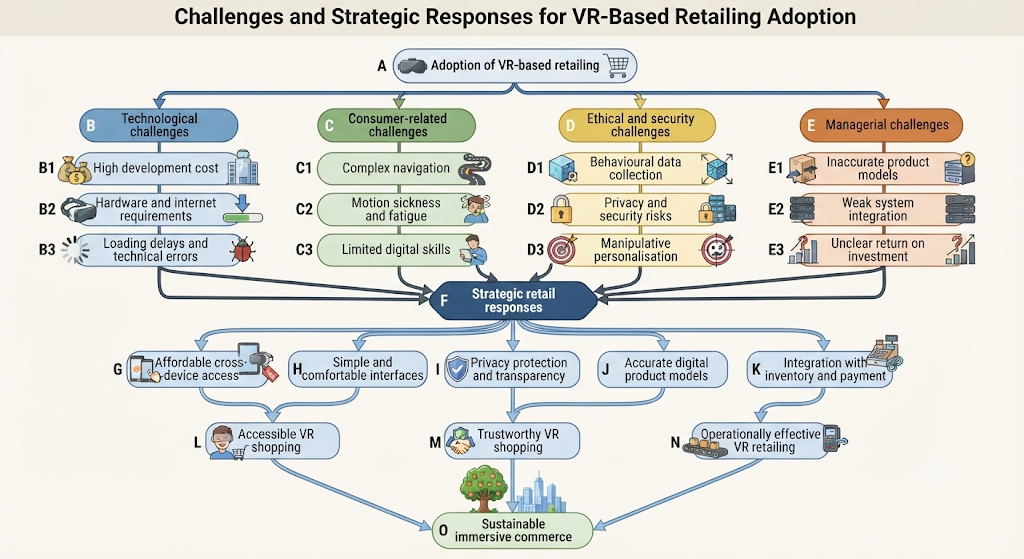
Figure 2: Challenges, strategic responses, and future implications of VR-based retailing
Strategically, retailers should introduce VR where it solves a clear consumer problem (Javornik, 2016). Product categories requiring visualisation, spatial evaluation, configuration, or demonstration are particularly suitable (Oliver, 1999). A customer-centred approach can ensure that VR improves consumer decisions rather than operating merely as a promotional novelty.
Conclusion#
Virtual Reality-based shopping has the potential to transform the digital consumer experience by increasing engagement, satisfaction, and purchase intention (Kim & Forsythe, 2008). Unlike conventional websites, VR allows consumers to enter simulated retail environments, interact with three-dimensional products, undertake virtual try-ons, and observe products in realistic contexts (McLean & Wilson, 2019). These capabilities reduce the distance between physical and online shopping.
Consumer engagement develops through cognitive, emotional, behavioural, and social participation (Poushneh & Vasquez-Parraga, 2017). VR encourages consumers to concentrate on product information, actively manipulate products, experience positive emotions, and spend more time interacting with retailers (Javornik, 2016). Immersion, interactivity, vividness, and telepresence strengthen this engagement when they support consumers’ purchasing objectives.
Customer satisfaction improves when the virtual system provides accurate information, enjoyable interaction, intuitive controls, and dependable performance (Davis, 1989). Perceived usefulness and ease of use are therefore essential (Poushneh & Vasquez-Parraga, 2017). Consumers are unlikely to value an immersive system that is complex, inaccurate, or irrelevant to their decisions.
VR influences purchase intention by improving product understanding, reducing perceived risk, strengthening trust, and increasing purchase confidence (McLean & Wilson, 2019). Consumers who can evaluate products realistically are more likely to believe that their choices will satisfy their requirements (Poushneh & Vasquez-Parraga, 2017). Emotional engagement and psychological ownership may further strengthen willingness to purchase.
Nevertheless, favourable outcomes depend on appropriate implementation (Klaus, 2013). Cost, device availability, motion discomfort, technological complexity, privacy risks, and inaccurate product models can reduce acceptance (Poushneh & Vasquez-Parraga, 2017). Retailers must provide accessible interfaces, transparent data practices, accurate representations, and integration with broader retail services.
Virtual Reality should therefore be implemented as a practical consumer decision-support tool (Wedel et al., 2020). Its long-term success will depend not on technological novelty but on its capacity to provide useful information, enjoyable interaction, trustworthy experiences, and measurable improvements in consumer outcomes (Martínez-Navarro et al., 2019).
Work Cited#
- Childers, T. L., Carr, C. L., Peck, J., & Carson, S. (2001). Hedonic and utilitarian motivations for online retail shopping behavior. Journal of Retailing, 77(4), 511–535.
- Cummings, J. J., & Bailenson, J. N. (2016). How immersive is enough? A meta-analysis of the effect of immersive technology on user presence. Media Psychology, 19(2), 272–309.
- Davis, F. D. (1989). Perceived usefulness, perceived ease of use, and user acceptance of information technology. MIS Quarterly, 13(3), 319–340.
- Flavián, C., Ibáñez-Sánchez, S., & Orús, C. (2019). The impact of virtual, augmented and mixed reality technologies on the customer experience. Journal of Business Research, 100, 547–560.
- Grewal, D., Roggeveen, A. L., & Nordfält, J. (2017). The future of retailing. Journal of Retailing, 93(1), 1–6.
- Hoffman, D. L., & Novak, T. P. (1996). Marketing in hypermedia computer-mediated environments: Conceptual foundations. Journal of Marketing, 60(3), 50–68.
- Huang, T. L., & Liao, S. (2015). A model of acceptance of augmented-reality interactive technology. Electronic Commerce Research, 15, 269–295.
- Javornik, A. (2016). Augmented reality: Research agenda for studying its influence on consumer behaviour. Journal of Retailing and Consumer Services, 30, 252–261.
- Kim, J., & Forsythe, S. (2008). Adoption of virtual try-on technology for online apparel shopping. Journal of Interactive Marketing, 22(2), 45–59.
- Klaus, P. (2013). The case of Amazon.com: Towards a conceptual framework of online customer service experience. Journal of Services Marketing, 27(6), 443–457.